Official website links end with .gov.sg
STACK Conference 2026
Pre-conference Workshops
*Please note that the programme may be subject to change without prior notice.
In this session, you'll learn how to effectively use built-in Apps like Distributed Tracing, Logs, Notebooks, Dashboards, and Smartscape to tackle challenges such as: - Critical performance issues - Problematic exceptions and logs - Complex transactions - Misconfigured deployments You will also discover how to use DQL (Dynatrace Query Language) to automate root cause analysis with Workflows. Who should attend: Devops engineer, Performance engineer, Architects, SRE engineers Prerequisites: To participate in this workshop, attendees only require a laptop with a web browser. Our presenter will guide you through a series of demonstrations to explore the technology.

Mr Myrvin YAP
Principal Solutions Engineer, APAC, Dynatrace
Mr Jason SOH
Assistant Director, Infrastructure Engineering Management, GovTech SingaporeWhether you are building critical public infrastructure or high-scale commercial platforms, ensuring the reliability of distributed systems is paramount. When modern applications face network outages, flaky APIs, or infrastructure failures, they must recover seamlessly without losing state or disrupting the user experience. This hands-on DevDay workshop introduces Temporal, an open-source durable execution platform that enables engineering teams across the private and public sectors to build invincible, fault-tolerant applications. By abstracting away the heavy lifting of distributed systems, such as manual retry logic, complex state persistence, and failure recovery, Temporal empowers developers to focus entirely on business logic rather than writing defensive boilerplate code. Through interactive, scenario-based coding sessions and architectural deep dives, attendees will learn how to: - Simplify Distributed Architectures: Replace brittle message queues, ad-hoc database polling, and complex state machines with clean, durable workflows. - Build Durable Execution: Manage long-running processes, orchestrate multi-system microservices, and handle transient failures with built-in fault tolerance. - Boost Developer Productivity: Reduce operational bottlenecks and speed up development cycles by eliminating writing boring defensive boilerplate code. - Integrate Agentic AI (Bonus): Add agentic AI capabilities to any application with your framework of choice, leveraging Temporal to ensure long-running AI operations and agent workflows execute reliably without timeouts. Who should attend: - Software Engineers & Developers: Backend developers from both enterprise and public sectors who want to simplify building reliable applications & workflows, or integrate durable AI/agentic capabilities into their apps. - Solution Architects & Tech Leads: Professionals tasked with designing scalable, fault-tolerant architectures and orchestrating complex multi-system interactions. - Platform Engineers & SREs: Engineers focused on improving application reliability, system observability, and reducing operational downtime in production environments. Prerequisites: 1. Bring own laptop 2. Internet connectivity 3. Knowledge of programming languages, e.g. TypeScript/JavaScript, Python, Java, Go
Mr Henry SURYAWIRAWAN
Staff Developer Advocate, TemporalBuilding LLM applications is only one part of the equation. Once an AI system is built, teams also need to know whether it is working well, reliably, fairly, and at scale. This workshop introduces practical ways to design evaluations for LLM systems, moving beyond informal “vibe checks” towards structured, contextual, and scalable evaluation workflows. Participants will learn how to define what should be tested, design representative evaluation datasets, create meaningful scoring criteria, and use LLM-as-a-Judge approaches responsibly with human review and validation. The session will cover different layers of evaluation, from general-purpose benchmarks to application-specific functional evaluations for real-world AI systems. It will also discuss common evaluation challenges and how one might mitigate them. Participants will leave with a clearer framework for evaluating LLM systems in real-world contexts, especially for applications where reliability, transparency, and responsible deployment matter. Who should attend: This workshop is intended for teams building or assessing AI systems, including product managers, engineers, policy officers, and UX researchers. It is especially relevant for participants who want to move beyond informal testing towards a more structured evaluation approach. No deep machine learning background is required, though some familiarity with AI applications, LLMs, or chatbot systems would be good. Prerequisites: Participants should have some familiarity with AI systems or AI-enabled products, whether as a product owner, developer, data scientist, or stakeholder involved in designing, deploying, or overseeing such systems. The workshop is intended for anyone who wants to better understand how to evaluate whether an AI application behaves as intended, including how to define what to test, develop meaningful evaluation criteria and test cases, and assess areas such as quality, safety, and reliability.

Ms Leanne TAN
Data Scientist, GovTech Singapore
Mr Shaun KHOO
Staff Data Scientist, GovTech SingaporeA hands-on workshop that dives into the building blocks of Agentic AI systems deployed in the real world. These include production-ready concepts pioneered by OpenAI, Anthropic, and leading LLM practitioners in the industry, coupled with first-hand experience from AI engineers at Supertype. Covering: - Building Agentic Systems beyond Chatbots - 6 Agentic AI Patterns for multi-agent AI systems - Guardrails and Enterprise Considerations" Who should attend: Perfect for product leaders and technical business leaders who want a more technical, first-principles glimpse of an agentic-enabled workforce beyond chat-and-query use cases. Prerequisites: No technical requirements, but participants should know they are free to bring their laptops to join along parts of the coding session if they want. If so, they should already have Python installed on the computer. Participants can also attend without a laptop - not a problem.

Mr Samuel CHAN
Incubator Lead, SupertypeThe Open Digital Platform (ODP)—jointly developed by JTC and GovTech—stands as Singapore's premier open middleware for cross-domain data orchestration, powering massive cyber-physical integrations from smart districts like the Punggol Digital District to maritime digital twins. As demand rapidly grows across various public sector agencies to adopt ODP's real-time IoT, 3D simulation, and data interoperability capabilities, scaling the delivery workforce is critical. This interactive workshop introduces participants to the ODP, its role in accelerating the integration and management of smart city and operational technology systems, and how users can use it to build scalable digital solutions. Through presentations, demonstrations and guided hands-on activities, participants will learn how ODP connects systems using protocols such as MQTT, REST, Bacnet and OPC-UA; governs and transforms data through tools and services. The workshop will explain how teams can deploy and connect their own systems and use cases with ODP. Who should attend: System Integrators, Software Engineers, Systems Engineers, Technical Leads, Solutions Engineers, Domain Architects Prerequisites: Internet laptop

Ms Celine CHIA
Principal Systems Engineer, GovTech SingaporeAs AI shifts from autocomplete to agentic workflows, engineering teams that can effectively transit from purely writing every line of code to orchestrating intent with agents will harness the next bound of velocity. This 2-hour session demonstrates how to scale engineering velocity safely by embedding AI throughout the SDLC while maintaining compliance. One way to approach AI-native Engineering is through Intent driven development and in this workshop, we showcase a dual approach to Intent-Driven Development, combining Spec-Driven Development (SDD) and Test-Driven Development (TDD). Centered around our internal agent skills repository, Agent-Prime-Directives (APD), we demonstrate how to bootstrap the agent skills directly into the developer workflow. These framework ensures developers effectively steer AI agents, preventing drift while automatically adhering to standards. Workshop Outline Part 1: Maximizing Engineering Velocity via AI Tools (60 Mins) Outcome: Participants are exposed to AI capabilities that speed up their engineering work. - AI-Driven Development: Authoring features with tools like claudecode, accelerated by pre-built SGDS agent skills to instantly deliver unified, compliant UI components, context retrieval through MCP tools. - Agentic Review & Scan: Leveraging prelude (an code review harness) paired with socket.dev to block supply chain risks in AI-generated code. - Continuous Delivery: Deploying autonomously to a secure, compliant runtime environment using airbase. Part 2: Harnessing Intent-Driven Architecture for quality outputs: Adopting SDD + TDD (60 Mins) Outcome: Participants are exposed to new ways of working with AI agents. - Workflow Adoption: Integrating frameworks like OpenSpec and superpowers directly into daily enterprise software development workflows. - Intent Negotiation: Utilising Spes to lock down scope and changes before code generation. - Endorsed Guardrails: Cherry-picking vetted TDD and SDD agent skills from Agent Prime Directives to establish explicit boundaries for autonomous execution. Key Takeaways: - Speed up engineering with AI Tools - Experience Shift to Intent Driven Development - Enforce Guardrails at Scale Who should attend: - Both Public Officers and Vendors - Roles: Developers, Agency CIOs or Engineering Managers Prerequisites: 1. Attendees should bring a laptop – preferably a Windows or MacOS device (Internet Accessible) 2. Attendees should have: a. Knowledge of how to read and write code in at least one programming language b. Familiarity with running or operating commands with CLI terminal c. Knowledge of Git fundamental to commit and push code d. Experience (preferably) using Gen-AI chat or terminal interface like chatgpt, claude, etc

Mr Alex CHNG
Lead Product Manager, GovTech Singapore
Mr Leon LEOW
Senior Product Manager, GovTech Singapore
Mr Kelvin WIJAYA
Senior Software Engineer, GovTech Singapore
Mr Sheikh Mohd SHAHEED
Senior Product Manager, GovTech Singapore
Mr Soedarsano
Staff Software Engineer, GovTech SingaporeWith over 80% of data breaches involving compromised identities, the perimeter is no longer a firewall—it is the user. As we move toward a future of "Agentic AI," where autonomous agents perform tasks on behalf of users, the definition of "identity" must evolve to ensure digital safety for all. In this hands-on, gamified Capture-The-Flag (CTF) workshop, participants will move beyond basic MFA to explore the architecture of modern, phishing-resistant identity management. Who should attend: Cybersecurity Specialists, Identity Architects, and Developers interested in AI Governance. Prerequisites: Laptop with internet connectivity 2. Cisco ID (participants can create one during event) 3. Basic understanding of cloud-based Identity & Access Management is preferred but not required

Mr Takashi YAMAMOTO
Identity Security Architect, Cisco Systems (USA) Pte LtdIn this hands-on bootcamp, attendees will learn about the importance of having visibility and control over their agentic AI applications. Participants will start with a pre-built agentic AI application (using open source framework such as Strands, Openclaw or LangGraph ) and learn to use TraceCtrl (open source and free for developers) to instrument it, trace agent interactions, and surface security violations. By the end, they'll have a full topology map of the app's agent communication and a concrete attack surface analysis with actionable hardening recommendations. Agenda: Part 1: Intro to Agentic AI & TraceCtrl (30 min): Overview of agentic AI and how TraceCtrl provides observability into agent behaviour, followed by a live product demo. Part 2: TraceCtrl Setup & Strands/OpenClaw Integration (60 min): Install and configure TraceCtrl to run alongside your agent, integrate it with your Strands/OpenClaw setup, and run a scan to generate an inventory of configured components, a static topology map, and a security assessment of your Strands/OpenClaw instance. Part 3: Remediation & Security Scenarios (30 min): Walk through how to fix identified issues, including auto-remediation, followed by a live demonstration of security scenarios on Strands/OpenClaw. Who should attend: This bootcamp is targeted at Developers or Security Analysts working in Public Sector or Enterprises who are keen to learn more about how to see and trace agentic AI system interactions and to detect security violations and respond or mitigate them. As there will be lots of hands-on lab and exercises, participants need to be proficient with CLI tools including git, dockers, api, etc. Prerequisites: 1. As this is a hands-on bootcamp, we will need every participant to have their own laptops with the following hardware specifications: a. Windows 11 and above (with WSL2), min 8GB RAM, 2 Core CPU and 5GB Free HDD space b. MacOS 12 and above, min 8GB RAM, 2 Core CPU and 5GB Free HDD space 2. Software requirements: We will be using the following software. Will be ideal if these are pre-installed before the bootcamp. a. Docker Desktop. https://www.docker.com/products/docker-desktop/ b. Python 3.10+. https://www.python.org/downloads/ c. Git
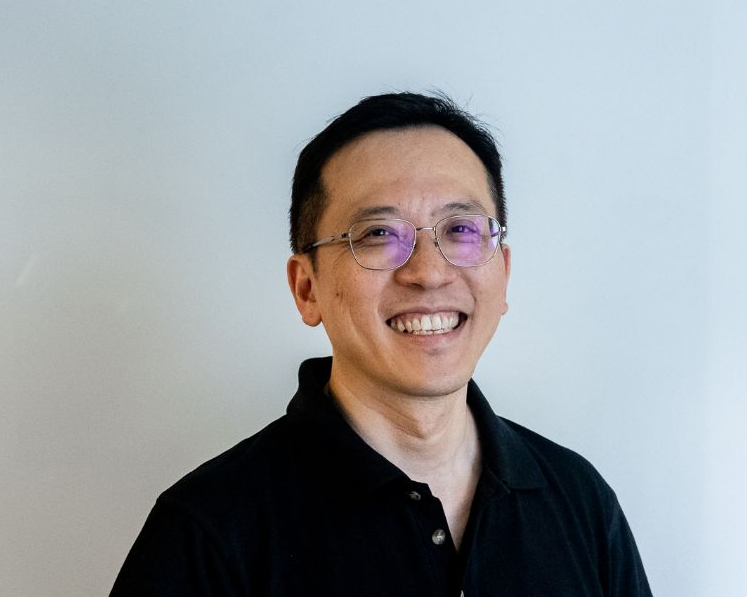
Mr Matthias CHIN
Founder and Chief Executive Officer, CloudsineAIHCLTech hands-on workshop focused on data-enabled user experience through Agentic AI. The core proposition is to transition from traditional analytics to agentic, data-driven workflows, where AI systems orchestrate the full data lifecycle—from discovery and governance to analytics, decision-making, and service delivery. Participants will work in a sandbox to build a context-aware agentic data platform, enabling automated workflows such as dataset discovery, classification, privacy enforcement, anomaly detection, and data product lifecycle management. The workshop aligns with Singapore’s push toward data-driven public services, cross-agency data sharing, and proactive citizen experiences, while addressing persistent challenges such as data silos, governance complexity, and slow insight generation. It demonstrates how agentic AI enables real-time, context-driven decision-making, allowing agencies to anticipate needs and deliver personalised, proactive services while maintaining compliance and trust. Participants will learn key capabilities, including discovering and contextualising distributed data, applying governance controls (classification, masking, validation), generating real-time insights, detecting trends and anomalies, and building transformation pipelines and data products with lifecycle governance. A representative use case involves a government agency building an agentic data platform for public-service insights, supporting use cases such as demand forecasting, resource optimisation, and citizen feedback analysis. The sandbox includes synthetic data, policy metadata, mock integrations, and governance rules to simulate real-world environments. Participants will build end-to-end agentic data workflows that automate data discovery, metadata generation, quality validation, analytics, and data product publishing. The workshop highlights how data evolves from a passive input into an executable asset driving decisions and outcomes. By the end of the session, participants will deliver a working prototype, reusable patterns for governance and analytics workflows, and a practical understanding of transforming data into insights and decisions. Expected benefits include faster data discovery, reduced manual effort, improved governance consistency, and better traceability. Who should attend: Data Engineers, Data Analysts, Data Stewards, Data Product Owners, Solution Architects, Government digital and data teams. Prerequisites: Bring your laptop, charger, and venue with high bandwidth Wi-Fi connection. 2. Check your browser - Use the latest Google Chrome or Microsoft Edge. Internet Explorer (including Edge's ""IE mode"") is not supported and will block sign-in. 3. Bring your own Anthropic (Claude) API key 4. Sign up or log in at console.anthropic.com 5. Create a key under Settings → API Keys (starts with sk-ant-) 6. Add a small credit balance — workshop usage is inexpensive, but a $0 balance blocks every request 7. If your track uses GitHub publishing. Have a GitHub account and a Personal Access Token (repo scope) ready. We'll confirm on the day whether this applies to your session.

Mr Arunkumar JAMBULINGAM
Data & AI Practice Principal, HCL Singapore Pte LtdWhat if coding felt less like wrestling with syntax—and more like setting the vibe? In this hands-on workshop, we’ll explore a new way of building software by pairing fundamental coding concepts with the latest AI tools. Whether you’re just getting started or looking to level up how you build, this session is designed to help you work with AI, not against it. We’ll cover: - Context Engineering & Planning — shaping the right inputs, constraints, and step-by-step plans so AI produces more reliable, high-quality results - AI Agents — how to delegate tasks and collaborate with AI to accelerate development - Spec-Driven Development — turning clear intent into working software with less guesswork Expect a practical, interactive session where you’ll learn how to go from idea → specification → working code, all while developing a stronger intuition for how modern software gets built. Come ready to explore, build, and get a little spicy with your coding workflow. Who should attend: - Folks with some experience in software development. - Knows their way around an IDE. - Bonus points if they have used a Terminal / Command Prompt before. Prerequisites: Laptop (Mac or Windows) with enough user privileges to surf the Internet and install software. 2. Software (free to use and download): a. VSCode (https://code.visualstudio.com/) b. OpenCode (https://opencode.ai/) 3. Account with OpenCode Zen (https://opencode.ai/zen) (just need a free account, no need to add your credit card).
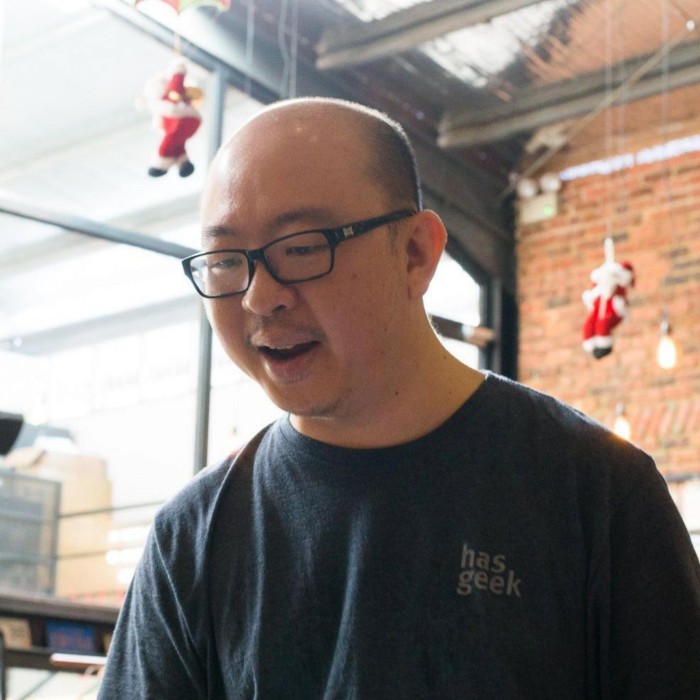
Mr Michael CHENG
Deputy Director, Engineering Management, GovTech SingaporeThis hands-on workshop combines modern observability practices with AI agent development in Elastic. Participants begin by deploying an EDOT-instrumented OpenTelemetry demo, validating end-to-end telemetry, and injecting controlled failures to troubleshoot a feature-flagged product catalog issue. Using logs, metrics, and distributed traces, they analyze service dependencies and apply AI-assisted investigation techniques during a payment stress scenario to accelerate root-cause analysis. Building on this foundation, learners shift to a UI-first agent workflow in Kibana. They inspect the Kafeju agent, understand how tools are defined, and create custom ES|QL-backed tools that integrate directly into the agent. Through exercises like exploring ML anomalies, reverse-engineering existing tools, and designing new ones, participants enable multi-tool reasoning that combines built-in and custom capabilities. The workshop culminates in agents answering realistic, data-backed FinOps-style questions, demonstrating how observability data and AI agents work together to reduce time-to-resolution and enhance operational insight. Elastic Serverless Observability removes five operational concerns you currently manage — shards, storage tiering, version upgrades, monitoring pipelines, and fixed infrastructure nodes. They stop being your problem entirely. That frees you up to focus on what the platform now enables: AI-driven investigations that surface root cause automatically, 100+ built-in ML jobs for anomaly detection and forecasting, ES|QL for sub-second queries across millions of metrics, and 450+ integrations out of the box. You get unified logs, metrics, traces, and synthetic monitoring in a single project; SLOs and alerting without infrastructure sizing; and continuous access to new capabilities like Knowledge Indicators and agentic remediation workflows — no upgrade cycle required. This workshop walks through the platform hands-on so you can see what's available from day one. Who should attend: Software developers, Project Managers

Mr Sean MATTHEWS
Senior Customer Architect, Elasticsearch Pte Ltd
Mr YAP Yi Sheng
Engineering Lead, GovTech SingaporeMulti-agent AI isn't just a buzzword — it's a workflow superpower. In this workshop you will build a practical agentic pipeline from ideation (using Claude Design) to code implementation (using Claude Code). Along the way, we will build a generic code-generation agent, a documentation agent, and a Playwright testing agent that work in sequence on a real project. You'll understand how to design agent handoffs, handle failures gracefully, and adapt the pattern to your own stack. You will leave the room with working code and a mental model you'll actually use in real life. Who should attend: Anyone with a Developer background. Prerequisites: Participants will need a laptop with a Claude paid license.
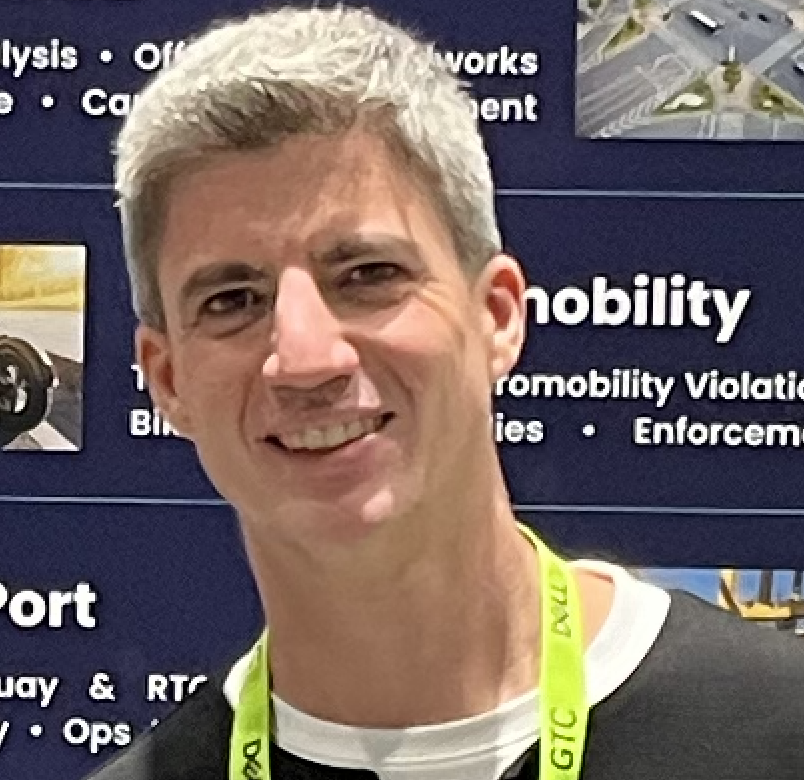
Mr Michael ISVY
Head of Engineering, ZenikaIn this hands-on workshop, you'll work with two of AWS's frontier AI agents. AWS DevOps Agent acts as your autonomous on-call engineer, correlating metrics, logs, and deployments to investigate incidents and identify root causes in minutes. AWS Security Agent secures your applications throughout the development lifecycle, from design reviews and code analysis to penetration testing and remediation. You'll deploy both agents against real scenarios and walk away with practical experience putting them to work. Who should attend: Developers, builders, DevOps engineers, SREs, platform engineers, and cloud architects who want to understand how autonomous AI agents can transform incident response and operational excellence.
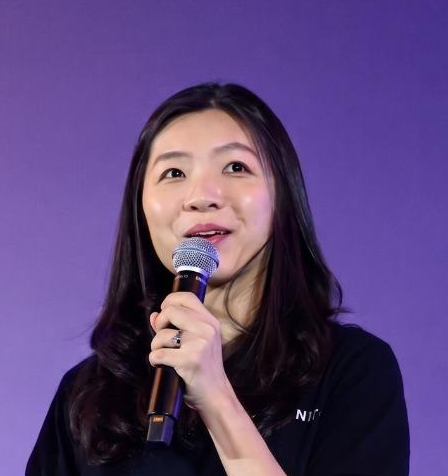
Ms Charis WONG
Senior Solutions Architect, Amazon Web Services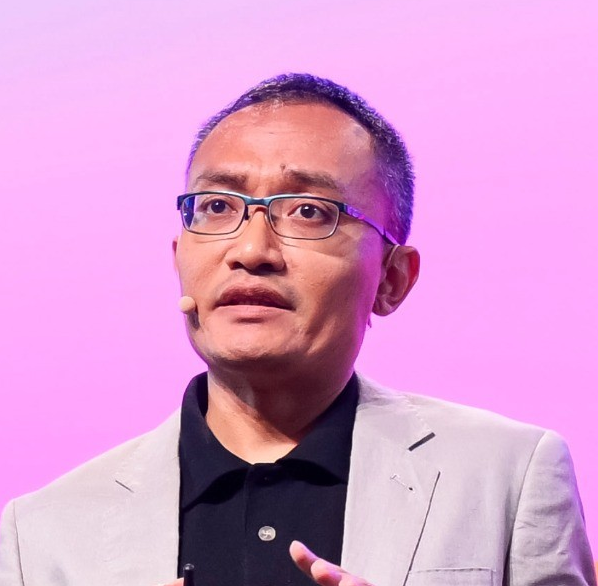
Mr Farid BAHARUDDIN
Senior Solutions Architect, Amazon Web ServicesCoding agents make implementation faster, but they can move bottlenecks into review, testing, deployment, and operations. Public-sector engineering teams also need traceability, repeatability, separation of duties, and controlled production changes. Participants will build a small Agent Development Lifecycle workflow for a simulated digital service. An incoming issue triggers an agent to investigate the problem, inspect current documentation, propose a code change, run automated checks, create a preview, and stage the result for human review. Participants will inspect traces and learn where autonomous execution should stop and accountable human judgment should begin. The workshop uses Cloudflare Workflows, Workers, agent tracing, programmable CI/CD, preview deployments, and browser-based validation. It shows how agencies and government-linked enterprises can increase engineering velocity without allowing autonomous systems to bypass quality, security, or change-management controls. Who should attend: Software developers, DevOps and platform engineers, engineering managers, SREs, test engineers, and teams evaluating coding agents or intent-driven development. Prerequisites: Bring an internet-enabled development laptop with Git, Node.js 20+ or Bun, and a code editor. Familiarity with Git, CI/CD, and TypeScript or JavaScript is recommended. Starter repositories and temporary sample infrastructure will be provided.
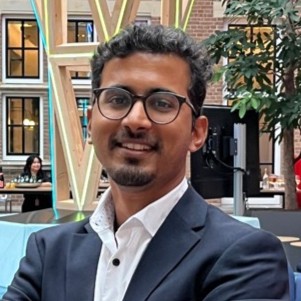
Mr Omkar KHAIR
Senior Solutions Architect, Developer Platform, CloudflareA 2-3 hour hands-on workshop on working with LLMs as an unfamiliar kind of intelligence rather than software you configure. First half: we build together to surface the principles that actually drive model behaviour, several of which contradict common advice. Second half: participants apply them to a problem from their own work. Mix of local models on a laptop and frontier APIs. Details: Most teams that deploy LLMs treat them like software you configure: set the parameters, write the instructions, ship it. Then the model ignores half the prompt, invents a fact, or behaves differently than it did yesterday, and it gets logged as a bug. Often it isn't. Working with these models has more in common with learning to collaborate with an unfamiliar kind of mind than with configuring a system, and that shift in framing is what this workshop is about. The first half is hands-on and structured. We build together to surface the principles that actually govern model behaviour, several of which run against common advice. Why over-specifying a prompt can make output worse. Why forcing temperature to zero can degrade a reasoning model rather than stabilise it. Why a constrained workflow tends to beat open-ended prompting. How a model can check and correct its own output, and where that approach breaks down. We run small local models on a laptop where that makes the point, and use frontier APIs where the task genuinely calls for it, so participants leave with a clearer sense of which to reach for, and how much routine work no longer needs the cloud at all. In the second half, participants work on a problem from their own context with guidance. The principles tend to land more clearly against real work than against a sample dataset. This matters most as systems become agentic: handing a model autonomy over a multi-step workflow only works if you understand the mind you're delegating to. The aim is practical: to leave with a more accurate mental model of how these systems behave, and the judgement to work with them rather than around them. Who should attend: Developers, architects, and technical staff who already deploy LLMs but can't always explain why a given model was chosen, or why it behaves the way it does. No prompt-engineering background required; a real use case matters more. Prerequisites: Bring a laptop and a real use case / a problem worth solving.

Mr Uli HITZEL
Principal AI Strategist, NaidaThis technical workshop moves beyond a generic demo by guiding participants through a progressive, end-to-end build of agentic systems. The session starts with a single tool-using agent that can perform tasks such as data retrieval, validation, and API calls, allowing participants to observe how it reasons and selects actions. This foundation is then extended into a coordinated multi-agent workflow, where specialized agents collaborate. One agent handles data retrieval using RAG, another validates accuracy and policy compliance, and a third generates responses or triggers an external API such as a mock government service. This progression demonstrates how autonomy emerges through structured composition. A key focus is making agent reasoning visible. Participants will observe the full reasoning loop including planning, acting, observing, and refining, as well as how tools are selected at each step. By exposing these intermediate decisions, the workshop goes beyond prompt-response interactions and provides practical insight into how agents operate, debug, and improve. The workshop uses a GovTech-friendly technology stack, with Python as the core language and LangGraph for orchestration. A lightweight retrieval layer, either mocked or vector-based with optional PostgreSQL integration, supports data access. The emphasis is on how these components work together rather than deep framework complexity. A dedicated module focuses on guardrails and responsible autonomy. Participants will learn how to enforce control mechanisms such as restricting tool access, preventing leakage of Personally Identifiable Information, and applying policy-based constraints on agent actions. Examples comparing behavior with and without guardrails highlight the importance of safe and compliant design in regulated environments. The session includes a guided hands-on component using a pre-configured repository or containerized setup. Participants will adjust prompts, swap or disable tools, and modify agent roles to observe how behavior changes in real time. This reinforces understanding and builds confidence in working with agentic systems. Finally, the workshop introduces key multi-agent design patterns, including separation of responsibilities, planner-executor workflows, and cooperative agent interactions, helping participants understand when and how to design scalable autonomous workflows. Who should attend: This workshop is designed for technical professionals, solution architects, AI engineers, developers, and innovation teams within government or regulated environments who want practical exposure to building agentic AI systems. It is suitable for participants with basic Python knowledge and an interest in AI orchestration, multi-agent workflows, RAG, and responsible AI design, including governance, guardrails, and automation. Prerequisites: 1. Basic knowledge on GenAI 2. Awareness on Agents (good to have) 3. Python Programming Language 4. Visual Studio Code

Mr Jeswanth GUTTI
Data & AI Leader, ASEAN, Kyndryl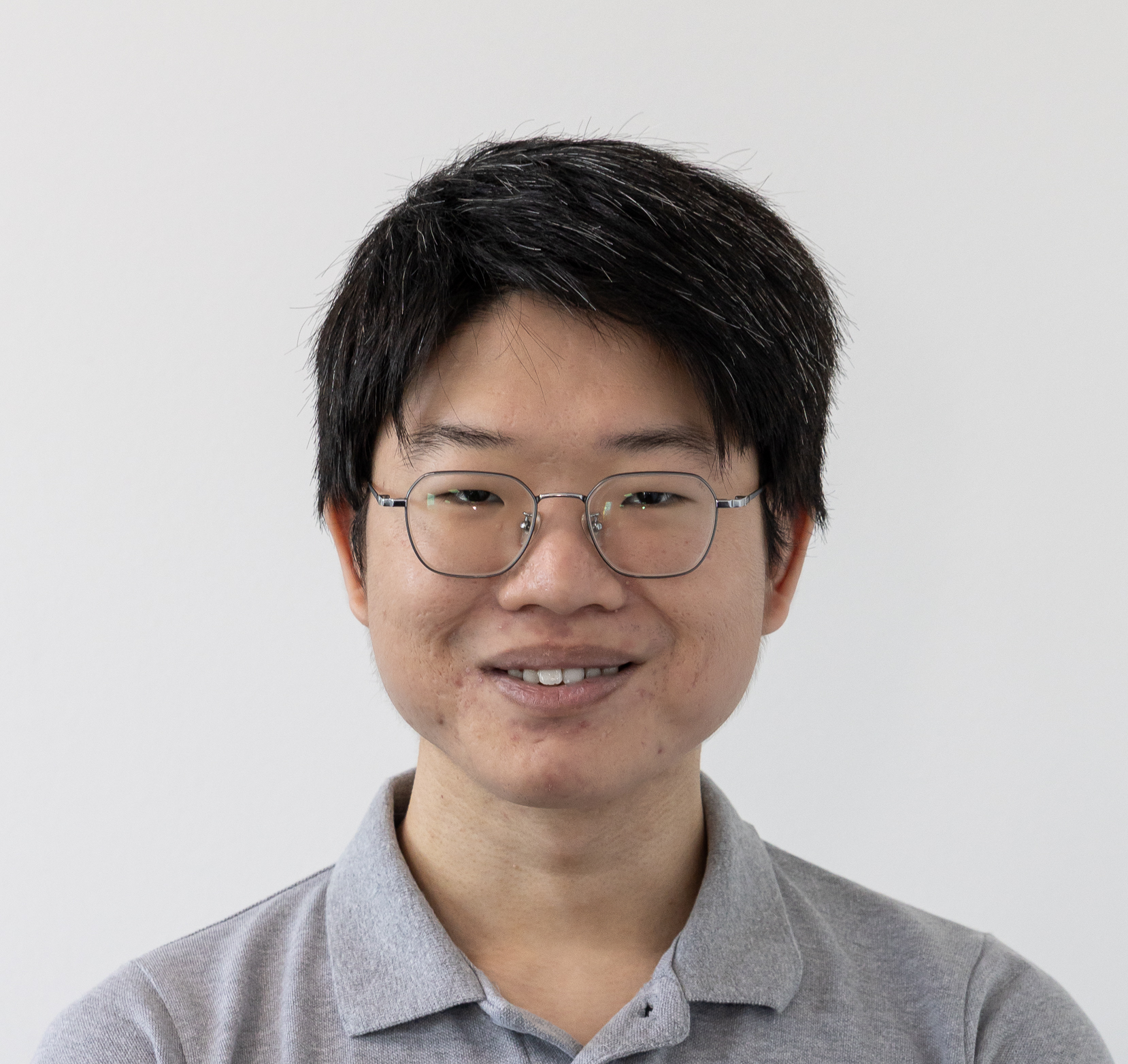
Mr KOAY Yong Zhuang
Full Stack Developer, ASEAN & Korea, KyndrylAs AI coding agents transition from simple autocompletes to autonomous partners, the role of the developer is undergoing a historic shift. Code generation is becoming a commodity — the true engineering bottleneck is no longer how to write code, but what to build and why it matters. Designed for software developers, tech leads, and architects, this workshop uses live demonstrations and hands-on practicals to introduce Spec-Driven Development (SDD), a structured, agent-native Software Development Life Cycle (SDLC) that shifts engineers from an implementation focus to a product and architect mindset. We will explore why applying cookie-cutter design patterns is now the job of coding agents, and how the human developer's value is elevated to empathy-driven system design, creative problem solving, and critical analysis. Working on your own laptop equipped with a coding agent (e.g. Codex/Copilot, Antigravity, or Claude), you will learn to write specs and direct agents from planning to validation. What You'll Learn & Practice 1. The Mindset Shift (Engineering to Product) — Transition from solving implementation syntax (the how) to defining strategic system boundaries and business requirements (the what). 2. From Asking "How" to Asking "Why" — Learn how to frame intent-driven specs by probing underlying user needs, data flow, and product constraints, rather than designing code structures first. 3. Empathy & Design Thinking — Understand how poorly defined user needs result in technically perfect but useless features, and learn to embed user-centric design directly into specifications. 4. Critical & Creative Thinking — Critically audit agent-generated architectures and identify architectural hallucinations before they become costly mistakes. 5. The 5-Phase SDD Lifecycle in Practice — Step-by-step execution of a human-in-the-loop lifecycle, from Planning and ADRs through Spec Commits, PAV/UAT validation, to Squash & Merge. Walk away with a practical framework and sample agent configurations (AGENTS.md) to scale your development velocity while maintaining control over software quality. Who should attend: Software Developers, Tech Leads and Architects. Product managers with some coding backgrounds are also welcome. Prerequisites: Entry-level Developer. Software requirements: a. Integrated Development Editor (IDE), e.g. VSCode, GenAI CLI, e.g. Codex, Antigravity CLI, Claude CLI. b. Git account

Mr CHAN Chi-Loong
Chief Product Officer, Genue