Official website links end with .gov.sg
STACKx Smart City 2024
Mr Goh Wei Boon
Chief Executive, GovTechCustomers are creating some of the most exciting and cutting-edge software defined cities with AWS. Join Bill Vass, Vice President of Engineering at Amazon Web Services, as he highlights some of the unique ways smart cities are using AWS from A to Z—including Internet of Things (IoT), training with real & synthetic data, high-performance computing, simulation, digital twins, and beyond.

Mr Bill Vass
Vice President of Engineering, Amazon Web ServicesJTC is paving the way forward for Singapore’s Smart Nation initiatives by championing next-generation estates such as Punggol Digital District, Singapore’s first smart and sustainable district. What role will the Open Digital Platform and digital twin technology play in shaping the district's future? Discover how these innovations will elevate operational efficiency, bolster sustainability efforts, and cultivate a vibrant ecosystem for the community to work, live, play, and learn.

Mr David Tan
Assistant Chief Executive Officer, JTC CorporationIn Southeast Asia, Singapore is the premier testbed for smart city solutions. But within Singapore, Punggol Digital District (PDD), has been designed to serve as the nation’s own hub for trialling smart sustainable solutions before scaling across the nation. It is here, in PDD, that ENGIE is developing not one, but two district cooling systems (DCS) and a centre for excellence in district cooling. Join us for an informative technical presentation on how ENGIE is breathing life into Singapore’s Sustainable Smart City model by leveraging its technical capabilities to shape the future of cooling in Singapore and across the region. With the demand for cooling expected to double by 2030 and require up to 30% of Southeast Asia's peak electricity demand by 2040, you won’t want to miss this presentation on how DCS can help the region scale its cooling to meet the rising need sustainably.

Ms Anne Miclo
Chief Technology Officer, ENGIE South-East Asia
Dr Lu Lu
Project Director, PDD DCS, ENGIE Services SingaporeThe ability to understand interactions between urban systems is critical to plan and design for sustainability, resilience and livability in a small city state like Singapore. Technologies such as urban analytics and modelling & simulation (M&S) give planners the capability to formulate and evaluate a wider range of scenarios and options in a much more agile and data-informed manner. Learn how URA’s Design & Planning is building up strategic Science, Technology and Engineering capabilities, and developing an ecosystem with key partners to support integrated urban analytics, modelling and simulation to enable urban planners and designers to address increasingly complex challenges.
Mr Loh Teck Hee
Group Director, Design & Planning Lab, Urban Redevelopment Authority (URA)Geomatics is the discipline encompassing the acquisition, processing, and management of geographic information. Geospatial technologies offer essential tools for understanding and analysing land use, resource utilization, and infrastructure development. Together, these technologies equip planners and decision makers with the necessary tools and techniques to gather and handle geographic data, enabling informed and effective planning decisions. Join our panel as they share their experiences, insights, and upcoming trends in these technologies and their application in Smart City Planning.
Mr Joe Lee
Chief Executive Officer, ESRI Singapore
Mr Ching Tuan Yee
Director, Design & Planning Lab, Urban Redevelopment Authority
Dr Victor Khoo
Director, Survey & Geomatics Division, Singapore Land Authority
Mr Lee Boon Seng
In this presentation, we explore the significance of the Electric Vehicle (EV) market in Singapore and trace the LTA National Electric Vehicle Centre’s journey from inception to the strategies we employ to propel EV adoption. Central to this is our use of data to develop a comprehensive masterplan that drives the sustainable growth of Singapore’s EV ecosystem.
Ms Stephanie Tan
Director, National Electric Vehicle Centre (NEVC), Land Transport Authority (LTA)Digital Twins have been gaining significant traction among various industries. This lightning talk will unravel the difference and commonality between two client types of digital twin (DT) applications: Thick Clients and Thin Clients. A thick client application refers to software application that is installed and runs on a computer or specialised terminal of good hardware and high computing performance. On the other hand, a thin client application is a lightweight application that would fit well to devices of lesser computing & hardware requirements. We will explore their characteristics, applications and synergy for different industries use cases.

Dr Ong Lay Teen
Lead System Engineer (Digital Twin), Smart City Technology Division (SCTD), GovTechModelling and Simulation (M&S) is a game-changing capability that will revolutionize planning, operations and management of the cities. By enabling the simulation and experimentation of countless scenarios in a Smart City context, M&S can accelerate innovation and development of planning and operational systems. What SCTD aims to do is to bring simulation management and infrastructure as a service through the cloud, providing interoperable tools and capabilities, and allowing seamless integration to agency’s enterprise systems through APIs and microservices. This talk presents the framework and principles that we have developed to support this effort.
Mr Wayne Tan
Senior Systems Engineer (Modelling & Simulation), Smart City Technology Division (SCTD), GovTechAs the senior population continues to grow, so does the demand for caregivers. The Sensei Care Kit addresses this need by aiming to boost caregiver productivity in monitoring the health of seniors. The kit enables collection of health data, including blood pressure and weight. This data empowers caregivers to remotely monitor seniors' health, facilitating early identification of those requiring increased attention. With the emphasis on encouraging self-monitoring. The immediate data feedback allows for more frequent health assessments, empowering seniors to make informed decisions about their well-being. The talk will delve into the technology and the improvements made.
Mr Tan Ding Hao
Systems Engineer, Smart City Technology Division (SCTD), GovTechGarnet Framework, formerly Smart Territory Framework, is an open-source framework for building scalable, reliable and interoperable platforms leveraging open standards, FIWARE open-source technology and AWS Cloud services. In this session, Ali Benfattoum will explain how to leverage the garnet Framework to build smart solutions, break data silos, bring data together into one single space from heterogeneous sources and extract actionable insights from data.

Mr Ali Benfattoum
Principal Product Manager, AWS IoT, Amazon Web ServicesOver the next decade, the Land Transport Authority (LTA) aims to integrate Autonomous Vehicles (AVs) into the public transport fleet. In pursuit of this goal, a project was initiated in 2021 under the LTA Urban Mobility Grand Challenge Programme. The primary objective of this project was to study the current design of bus stops, taxi stands, and general Pick Up and Drop Off points (PUDOs) and make recommendations for any changes to facilitate the seamless integration of AVs in future. The project was led by TUM Asia in partnership with NUS, NTU and AV bus developers ST Engineering Autonomous Solutions. Motional, an AV Robo-Taxi developer as well as bus operators SBS Transit and Tower Transit also collaborated in the project. This brought together several complementary expertise such as industrial design, traffic engineering, low-cost camera sensors for situation awareness and state-of-the-art AV technologies. This panel discussion aims to delve into our approach to identifying challenges and the pathway leading to our recommendations within the rapidly evolving landscape of AI-driven AVs. Additionally, potential next steps will be explored and discussed.

Dr Alok Prakash
Scientific Director, M3S, Singapore-MIT Alliance for Research and Technology (SMART)
Dr Jung-Joo Lee
Deputy Head (Research) & Assistant Professor, Division of Industrial Design, National University of Singapore
Dr Graham Leedham
Smart City Technology drives greater agility and efficiency to how businesses functions and citizen interacts. There is another underlying secret ingredient supporting the technology which transcends between the cyber and physical spaces. Through embracing the security by design principle, the consequential risk of the lego blocks of the smart city technology integrated with operational systems is mitigated through an iterative risk managed rigor. In this sharing, you will hear about the emerging cyber threats in the cyber-physical realm and how we can better address such cyber-physical pervasiveness.
Mr Bernard Tan
Director of Architecting & Solutioning, Cybersecurity Group (CSG), GovTechMost inspection to check for anomalies are usually done manually, by walking the ground and eyeballing. It is easy to miss anomalies due to fatigue especially for anomalies that occur over long term. Instead, we use robots to collect data regularly and perform anomaly detection in the cloud with unlimited processing power and with unlimited trials of improving algorithms. Humans then focus only on the actual anomaly inspection and recovery task. We look at several case studies and discuss surprising results that robots can further uncover.
Dr Ho Chin Keong
Deputy Chief Executive Officer & Chief Technology Officer, Senserbot Pte LtdThe digitalization of cities first began with the European Digital Cities: the Challenges of the Future conference in Copenhagen in the 90s. This marked the shift of offline information and services to the online sphere, leveraging the emergence of the Internet. The focus later evolved into Smart City, utilizing sensors, networks, and analytic, with IBM’s introduction of Smarter Planet in 2008. Now, the focus is evolving again. With the advent of 5G, cloud technology, Big Data, AI, and Large Language Models, we are looking at the emergence of cognitive city as the future. This session will focus on how the emerging trends will further transform cities, making them alive and capable of providing proactive and personalized services to enhance user experience.
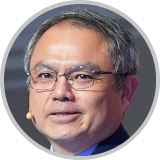
Mr Koh Hong Eng
Global Chief Public Services Industry Scientist, Huawei TechnologiesSingapore's population is expected to age rapidly, with one in four Singaporeans to be aged 65 and above by 2030. This presentation will touch on some of our efforts such as Personal Alert Buttons for seniors at home, Sensei Care Kit and SmartGym to transform our city into an enabling place for seniors to live independently and comfortably while remaining integrated in the community.